

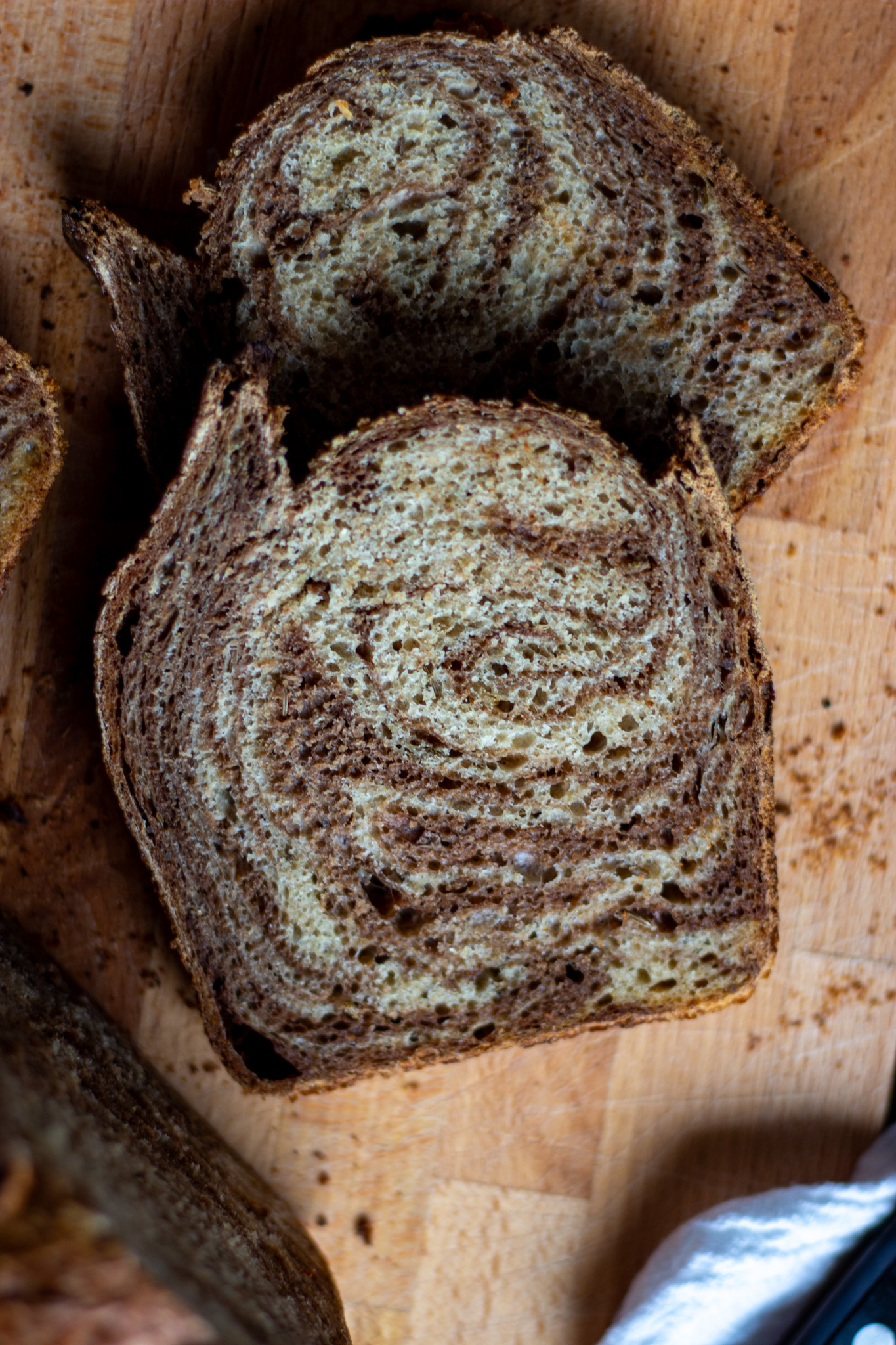
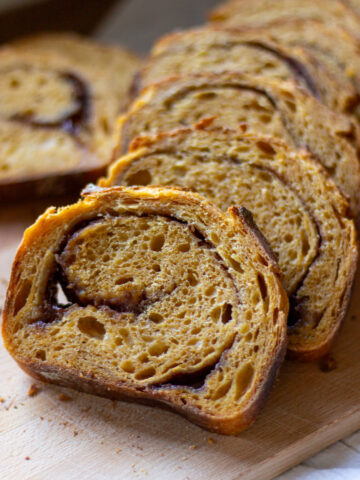
Swirl together a dark and a light rye dough to make this show stopping marble sourdough rye. It's soft and chewy on the inside, crisp on the outside, and has the distinctive flavor of a classic deli rye thanks to the caraway seeds in it.
This loaf is like this well-loved soft sourdough sandwich bread and this artisan sourdough rye combined into one, with the added fun of marbling! I'd always been perplexed by how rye gets marbled. But now that I know, I'm here to tell you that it is fun and SO easy!
Quick Look: Marble Sourdough Rye
- Recipe Name: Marble Sourdough Rye
- Ready In: 18 hours (yep, it's a slow-rise bread leavened with only sourdough, plus rye flour slows the rise. It's worth the wait!)
- Serves: 8
- Calories: 276 calories per serving
- Main Ingredients: Dark rye flour, caraway seeds, molasses, active sourdough starter
- Why You'll Love It: A classic rye flavor from the caraway seeds and rye flour is taken to the next level with sourdough. This bread is filling, nutty, and so complex. The marbling effect is a show stopper and is SO fun to do!
SUMMARIZE & SAVE THIS CONTENT ON
I bought some really amazing marble rye from a bakery last year for deli sandwiches, and since the resulting sandwiches were so good, and the loaf of bead cost $8, I decided I had to try to make my own. Now I can't get enough!
You don't have to mix two separate doughs here. Just mix one, divide in half, then work in some cocoa powder to one until it's a uniform color. Voila, the dark dough!
The stretch and folds are what will give you your marbling, so don’t skip them! It is so fun to see the dough change with each one.
Jump to:
Why You’ll Love This Recipe
- The best flavor - If you're into seeded rye, you will LOVE this bread. Put as much caraway seed in as your heart desires! The rye flour (for nuttiness) and sourdough (for just a hint of sour in the mix) truly take this to the next level.
- A slow rise - Some people see this as a bug, but I think it's one of the best features of sourdough. You have so much margin for error here - if your day gets busy, don't sweat it - you can come back and pick up where you left off. Pop the dough in the fridge if you need to. Plus, just like in this sourdough honey whole wheat bread, the long rise will give your bread such incredible flavor and texture!
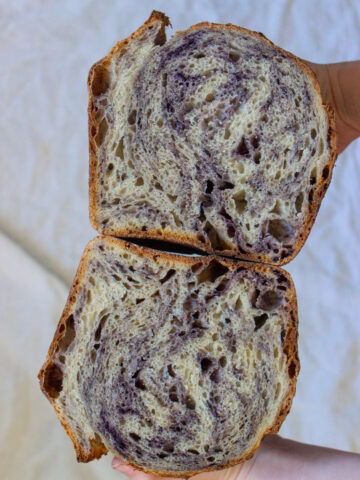
- The marbling effect - There are few things as exciting as cutting into a marble loaf and seeing how pretty it looks (yes, my 30's are every bit as exhilarating as they told me they would be :)) If you love doing stretch and folds, you will love them even more in this recipe because that's where you see the marbling magic happen.
- The best sandwiches and fancy toasts - Get yourself some cold cuts and go to town, broil slices with cheese and sliced tomatoes. Soft bread, crisp crust, amazing flavor - it's the perfect base for so many delicious ventures. (And if you're passionate about sourdough and really great sandwiches, do yourself a favor and try these sourdough hoagie rolls!)
Key Ingredients
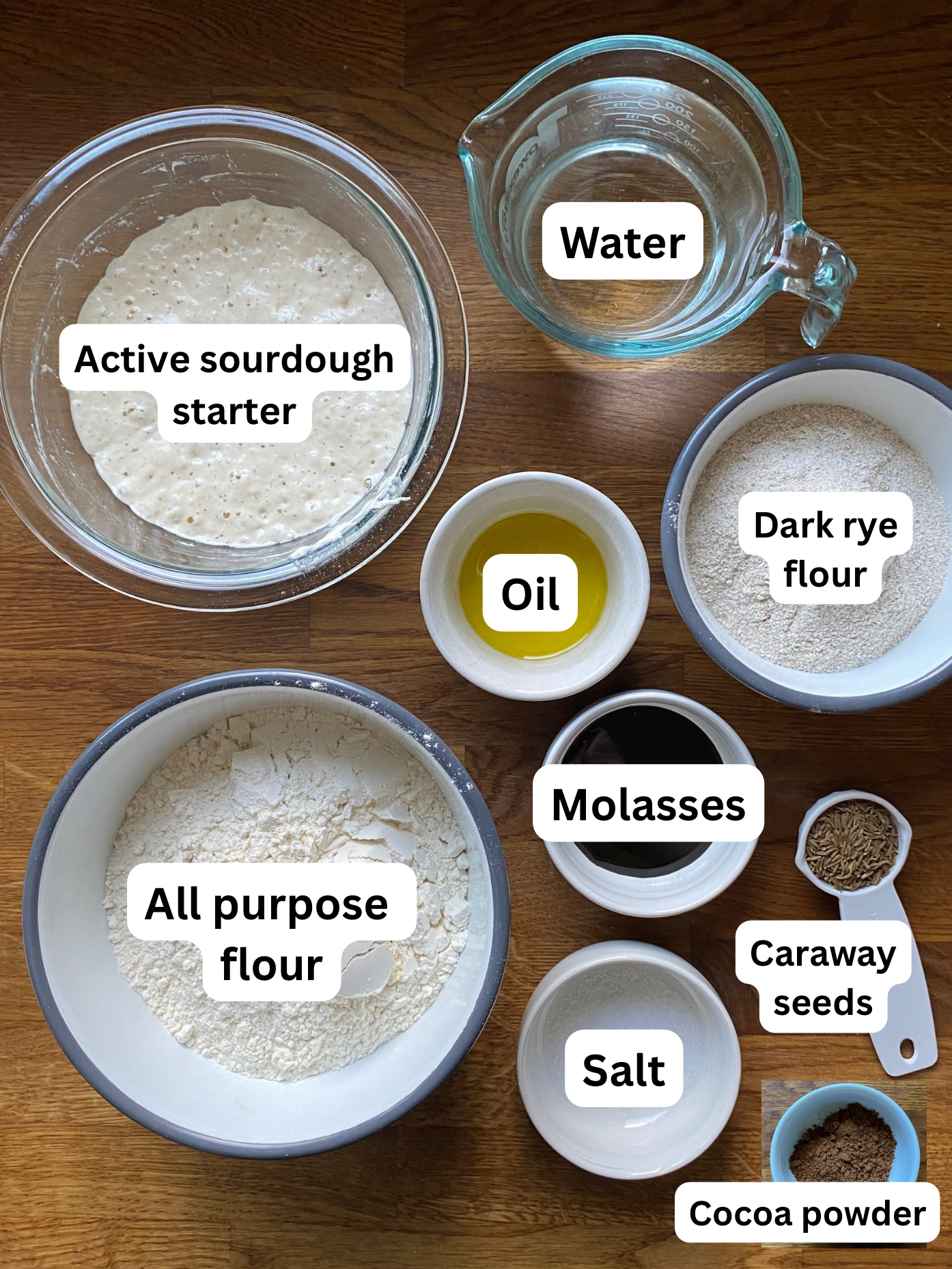
- Dark rye and all purpose flours - Using a combination of flours gives you the best of both worlds - a great, nutty flavor from the rye, and an easy to work with dough with predictable rise times and a great oven spring thanks to the all purpose.
- Active sourdough starter - This bread is leavened using just sourdough starter, so a healthy, active starter is a must! Since this doesn't use a ton of starter, the rises might feel extra long, but the flavor pay off will be worth it!
- Oil - I prefer a neutral oil here (like vegetable or avocado), but you can use something like olive oil or coconut oil (liquified) if you are okay with the taste.
- Molasses - Molasses seems to always be paired with rye flours, and it's for good reason - their flavors play so nicely together! You don't need a ton of molasses here, but it will carry more than its weight in adding flavor, softness, and increasing the shelf life of your bread. (And if you love molasses in baked goods, try this sourdough sweet molasses brown bread and these sourdough gingerbread cookies.)
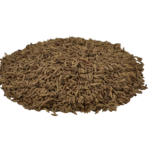
- Caraway seeds - The star of a seeded rye! I was shocked when I started making breads with rye flours and they didn't taste too terribly different from a standard loaf. It turns out, caraway seeds are what give deli rye its distinctive taste. If you love that flavor, don't skip the caraway seeds!
- Cocoa powder - Yes, the dark dough is colored with cocoa powder, but I promise you it will not taste like chocolate. There is so little of it that it really isn't distinguishable as chocolate - I'd describe it as more of a depth of flavor. If you're REALLY opposed to cocoa in your sandwich bread, you can reduce the amount to 1 tablespoon. Just know your doughs will have less contrast and thus the marbling will be less pronounced!
Easy Substitutions + Variations
- Omit the caraway seeds - If you're not a fan, or don't feel like getting this grocery item, you can leave them out!
- Honey for molasses - You can definitely use honey (or even maple syrup) instead of the molasses. Molasses is the traditional sweetener in rye breads, so I highly recommend using it if you can, but feel free to substitute if you'd prefer.
- The flours - Definitely stick with dark rye here! I have used bread flour instead of all purpose here and gotten nearly identical results - that's the only flour swap I would make!
How To Make Marble Sourdough Rye
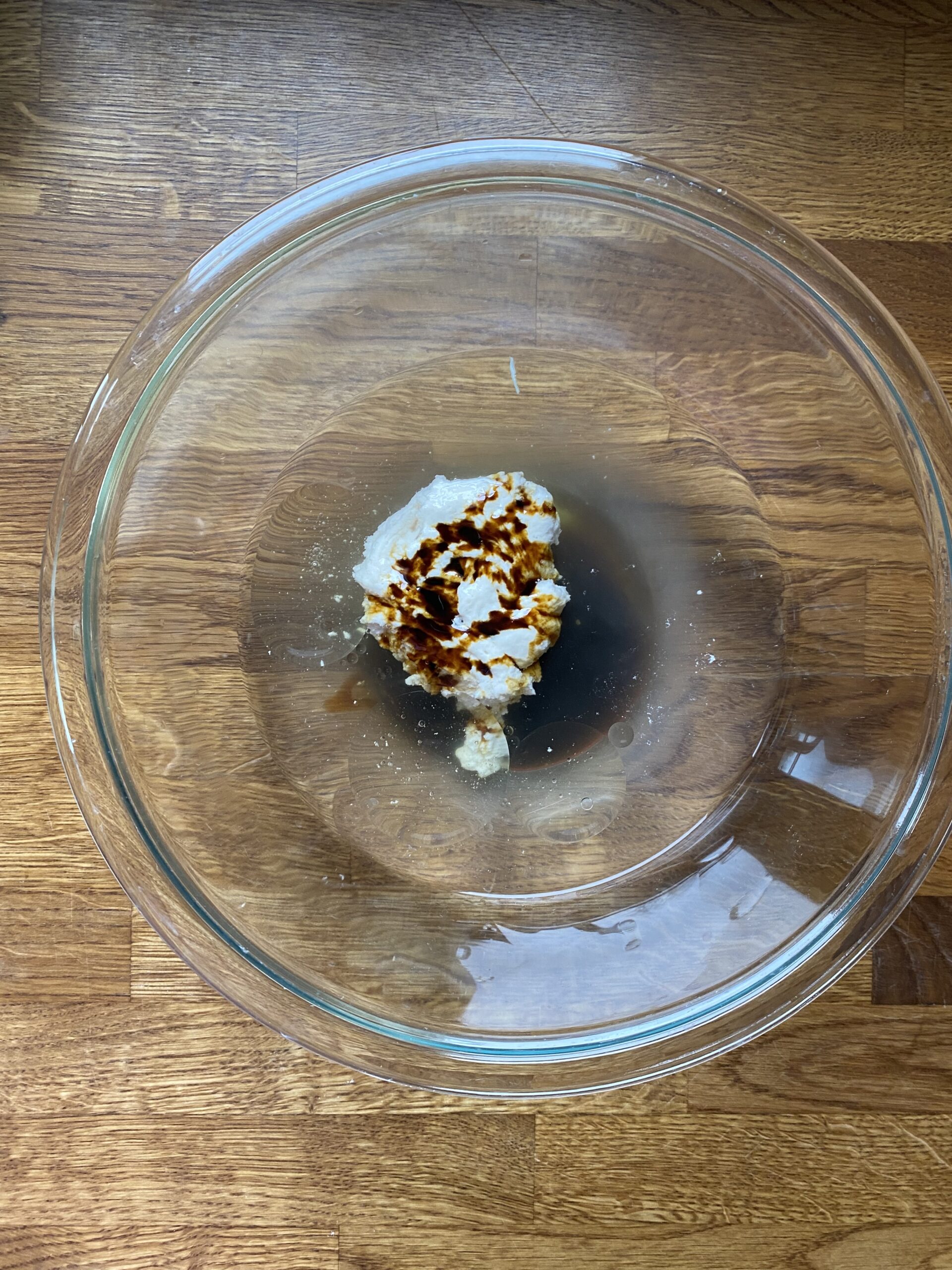
Combine wet ingredients in a large bowl.
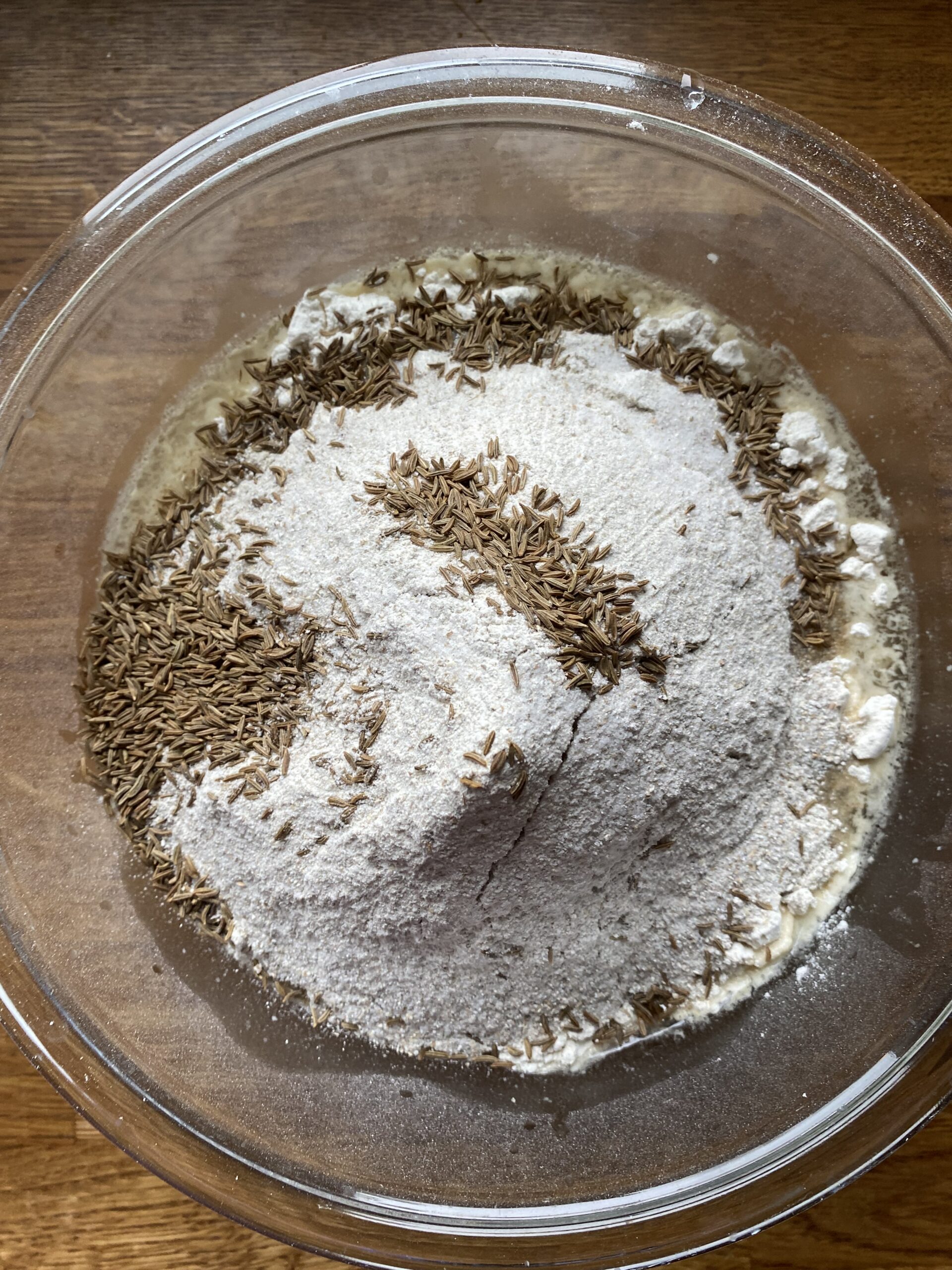
Add the flours, caraway seeds, and salt, and mix to form a cohesive dough.
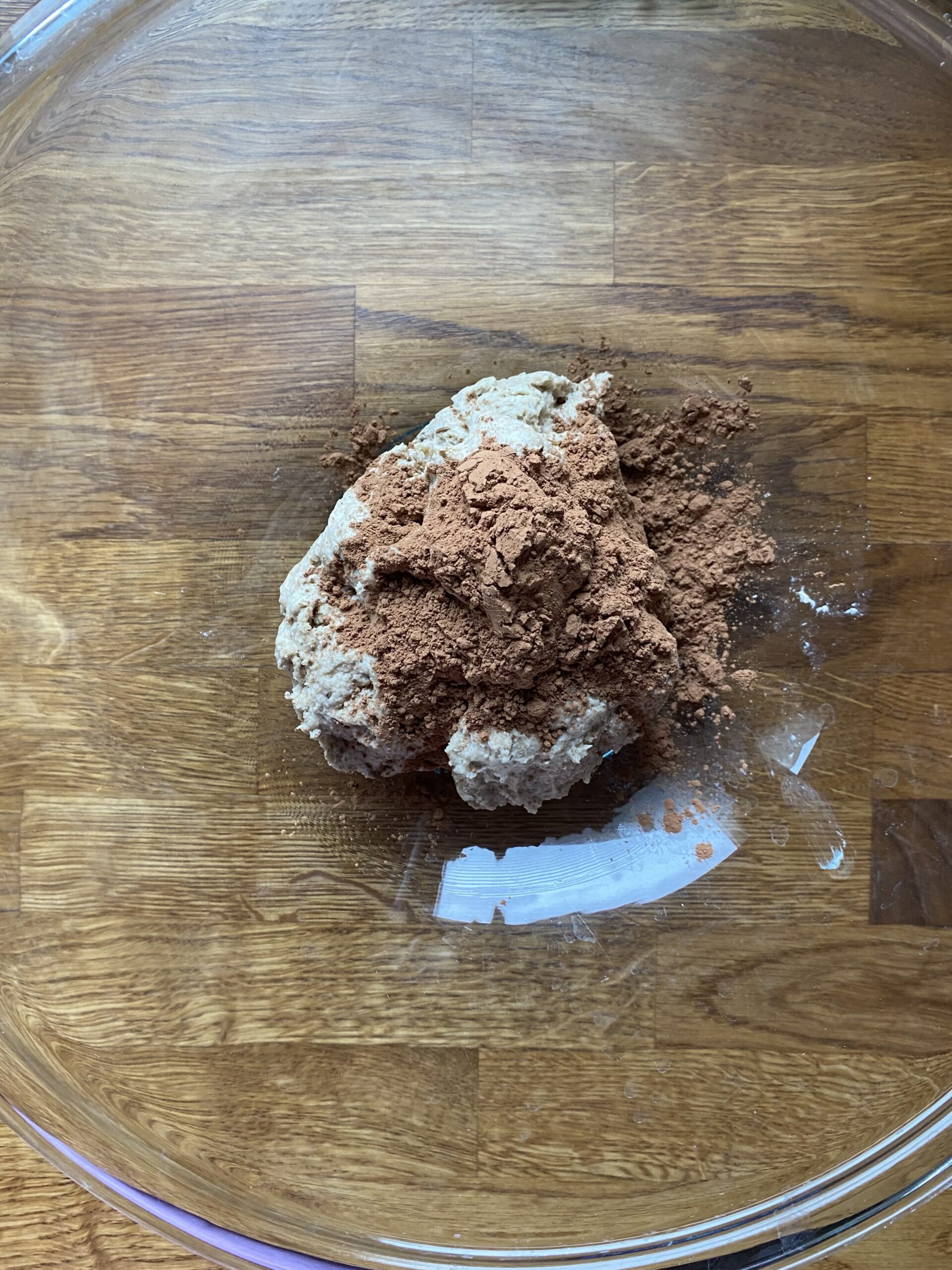
Move half the dough to a separate bowl and work in the cocoa powder. This will be your dark dough.
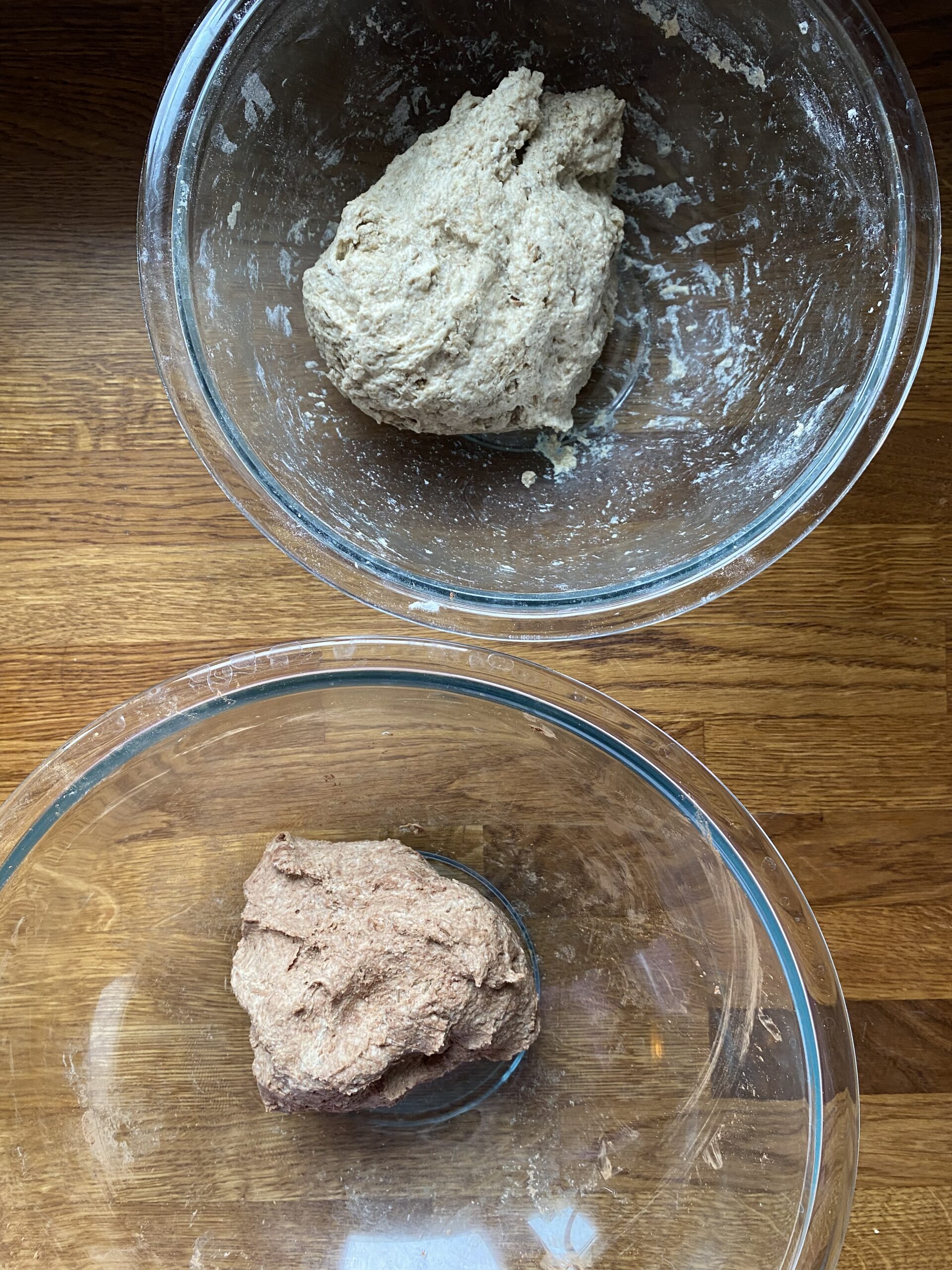
Cover both bowls and allow to rest for 30 or so minutes.
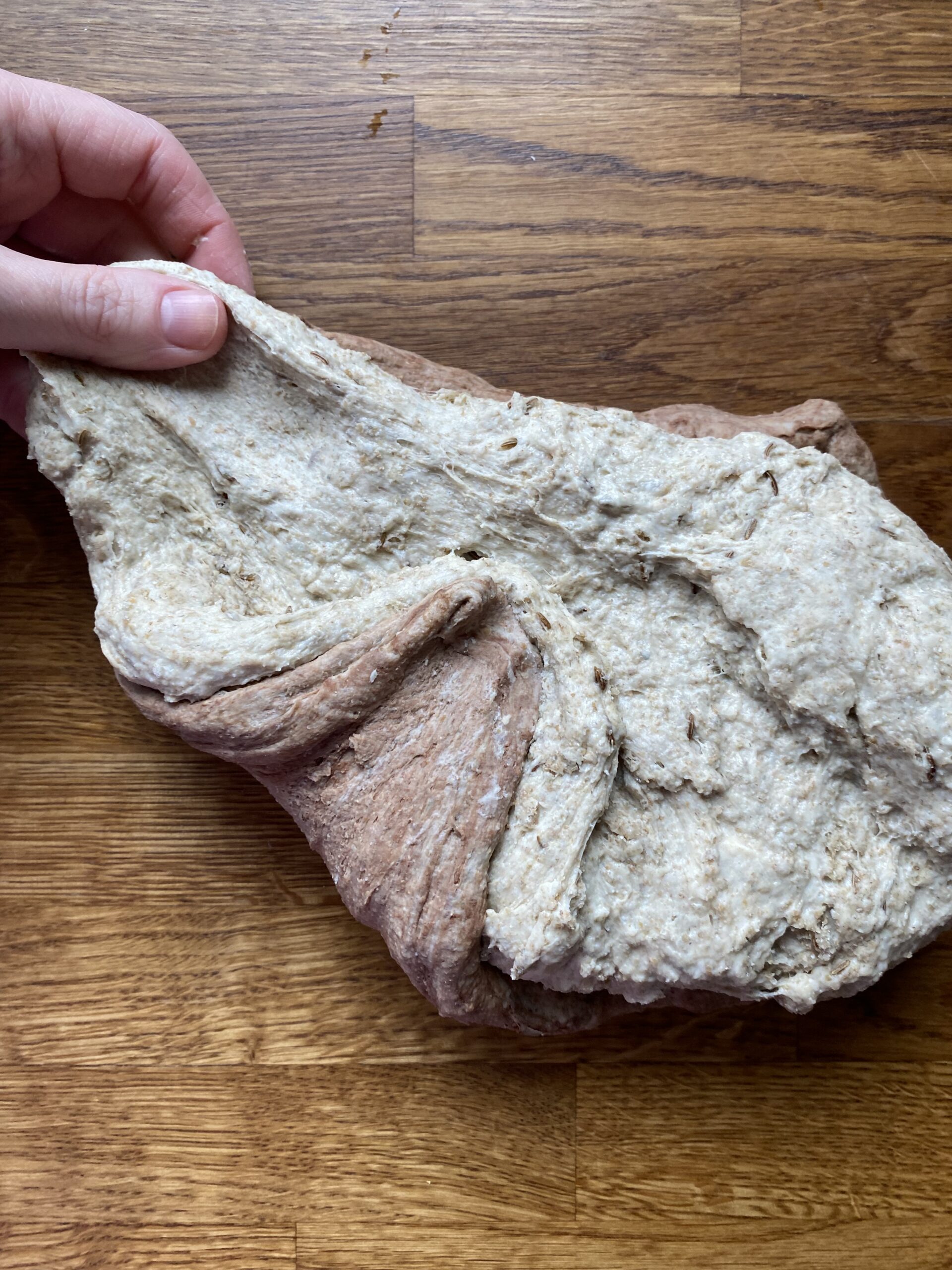
Layer both dough balls on a clean work surface and press into a rough rectangle. Fold in the corners to make a ball.
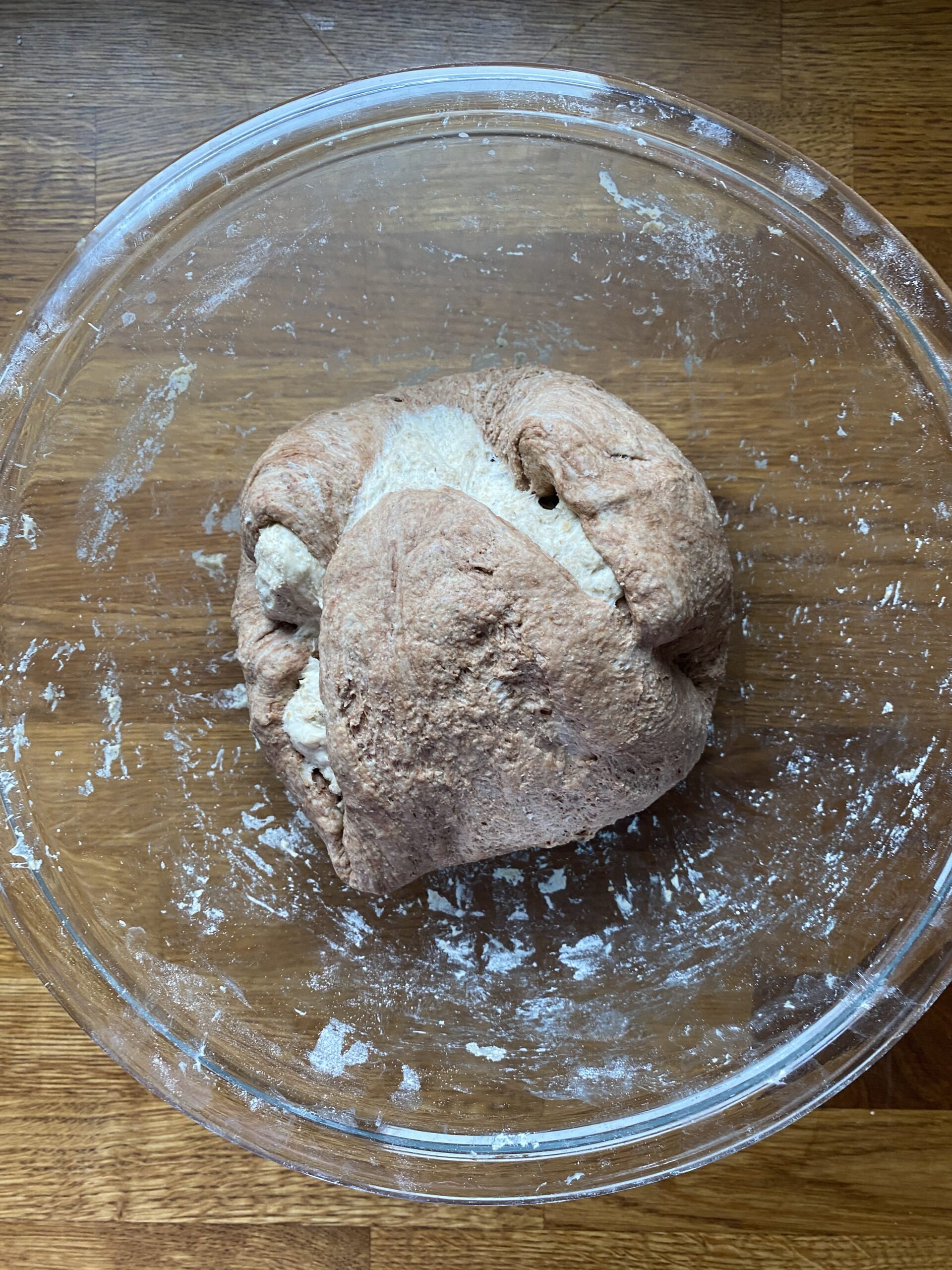
Return the ball to the mixing bowl.
Over the next 3-4 hours, you'll do 2-3 rounds of stretch and folds. This is what makes your marbling, so don't skip it!
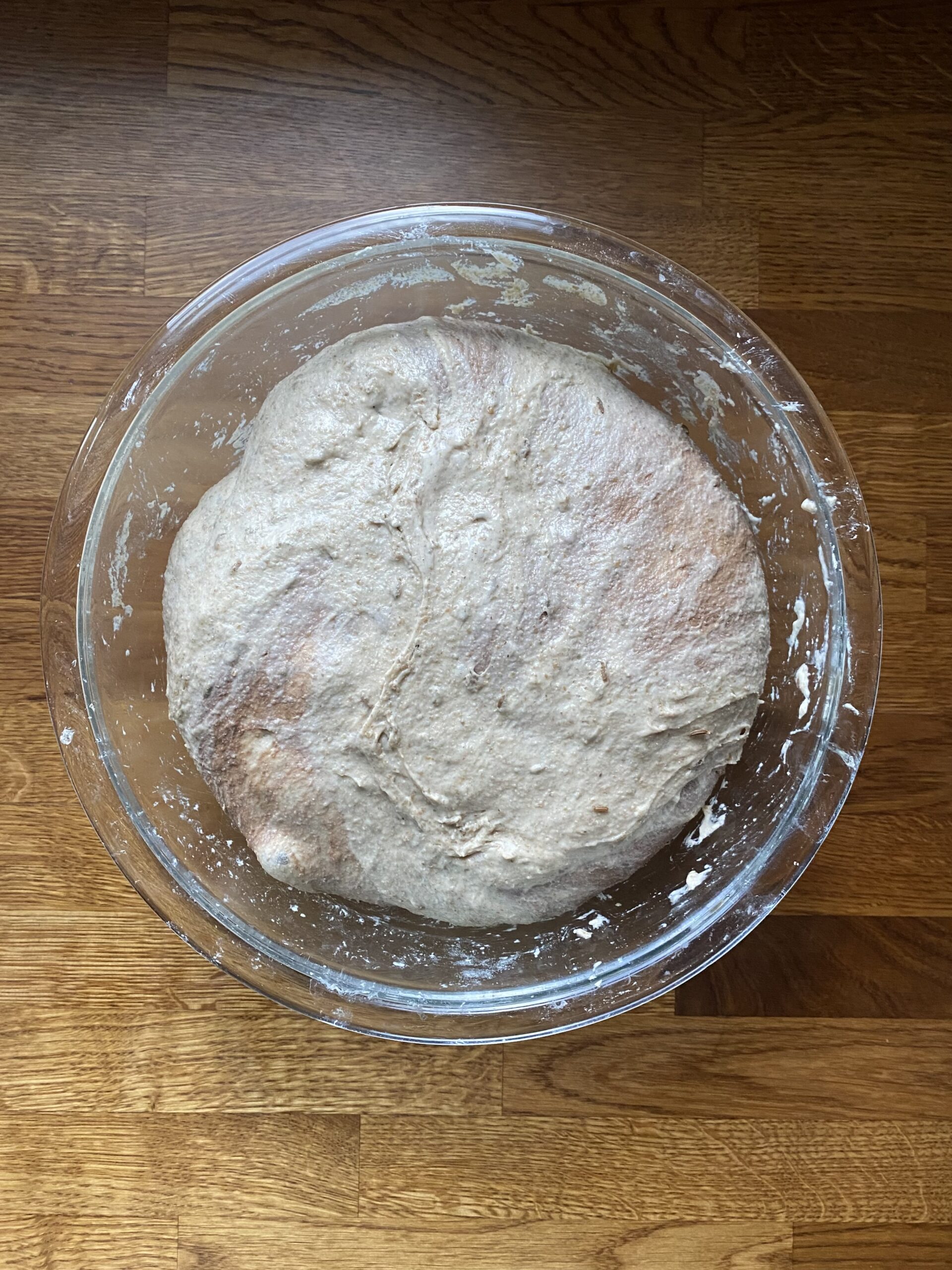
Let the dough rise until doubled in size.
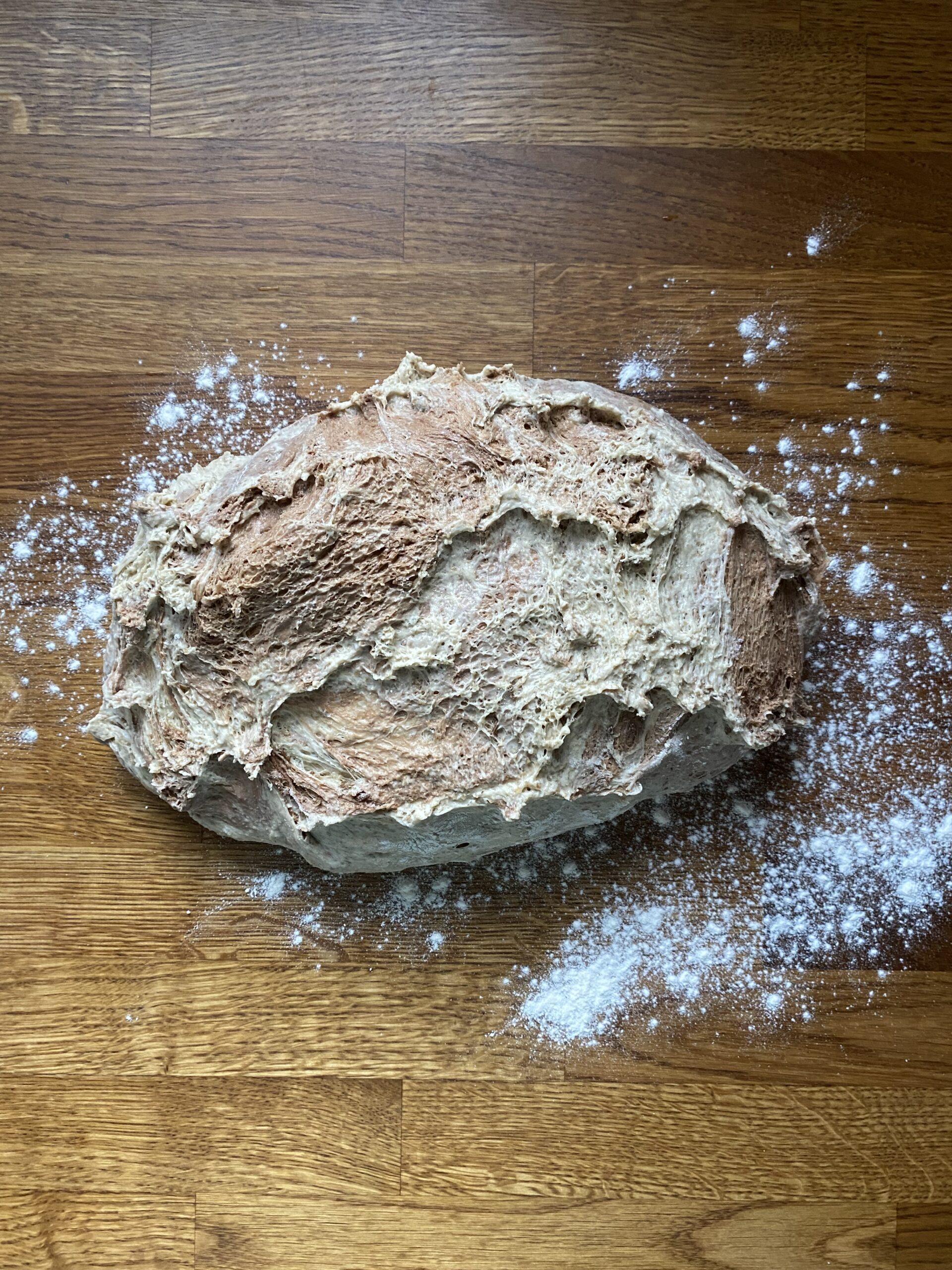
Turn the dough out onto a lightly floured work surface and shape into a loaf.
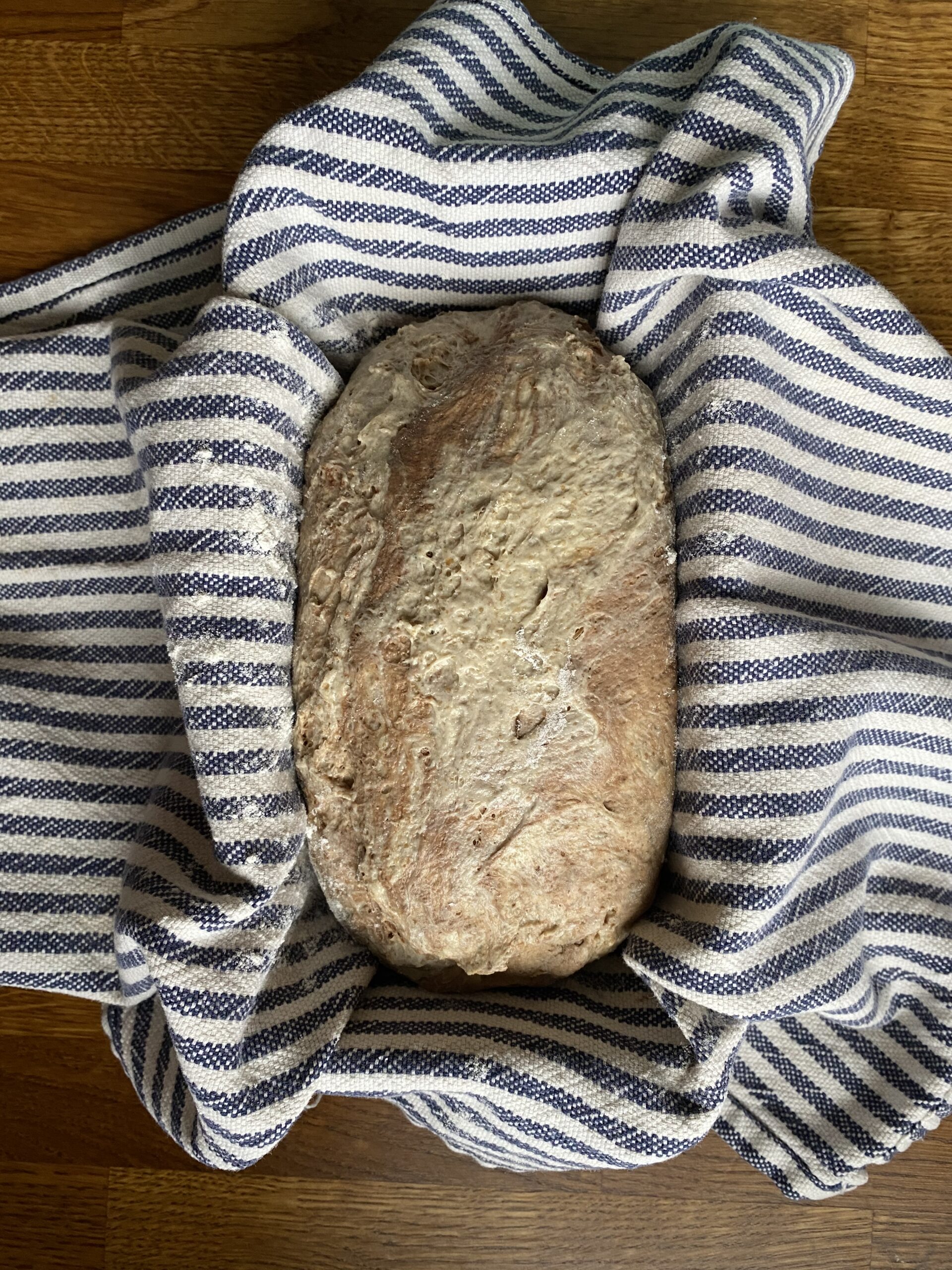
Place in a loaf pan lined with a floured tea towel and let rise 1 ½ - 2 hours more.
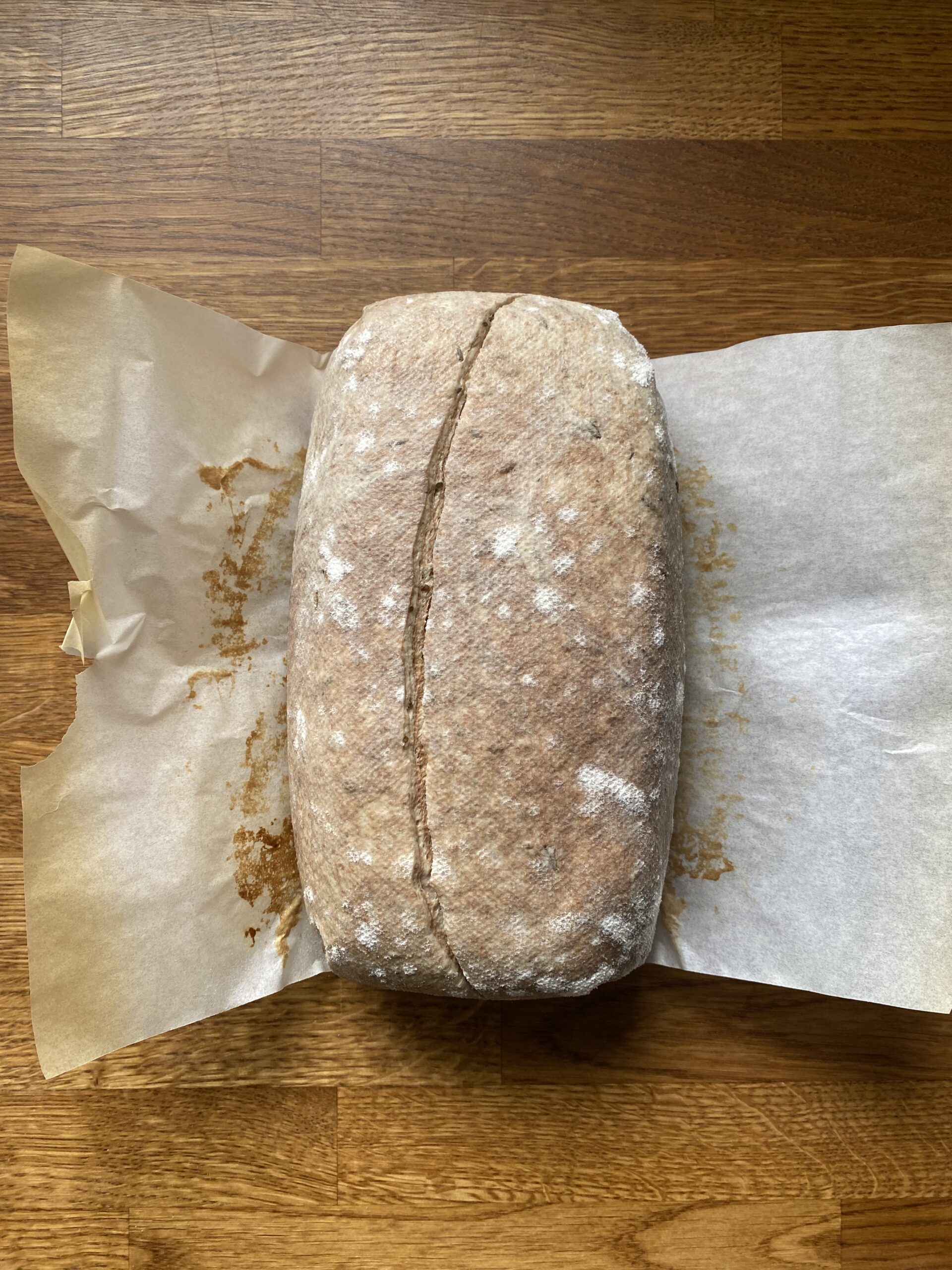
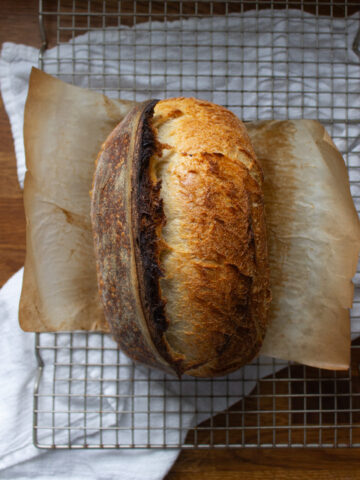
Turn out onto a piece of parchment paper and score.
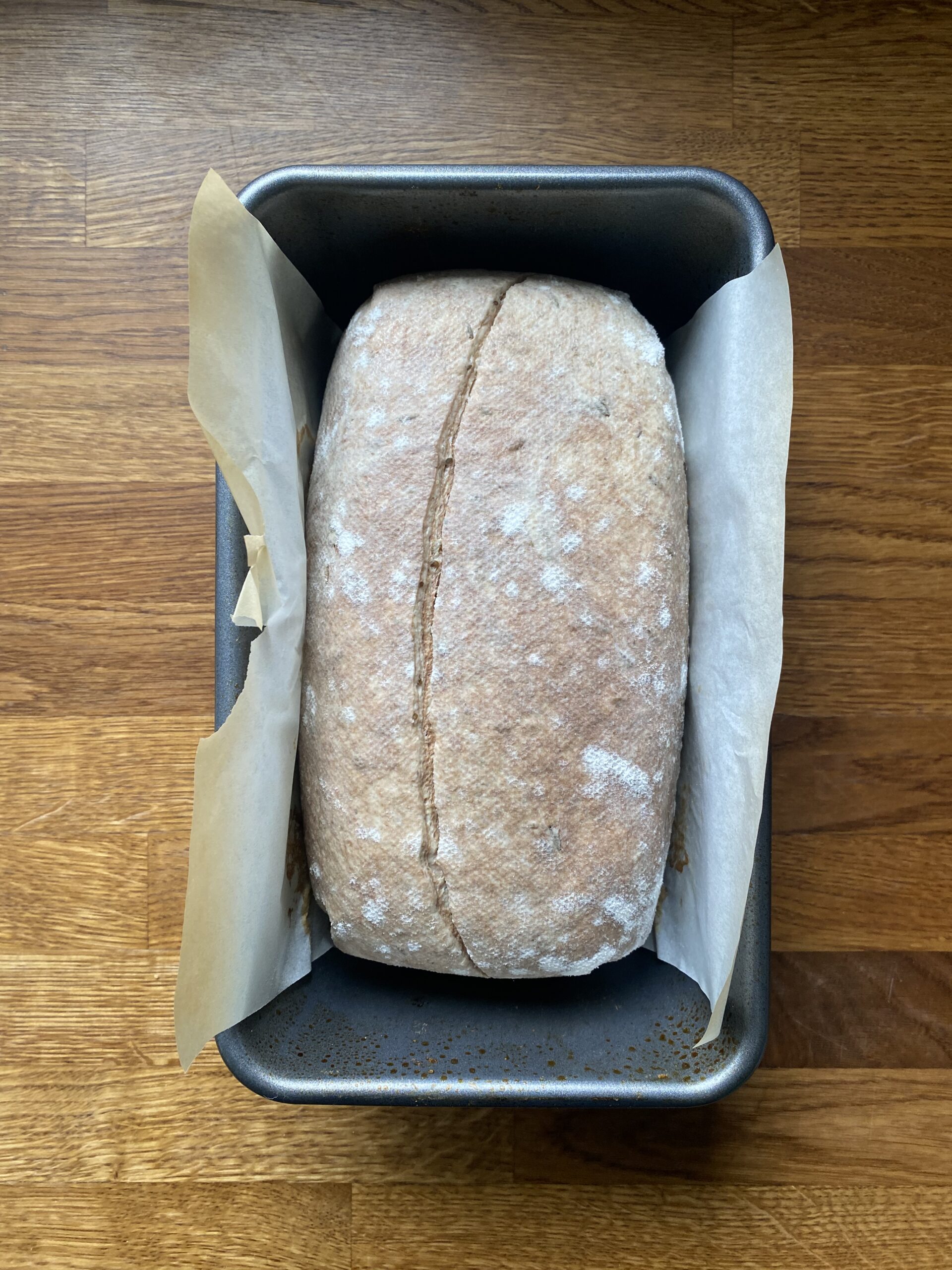
Use the parchment paper to transfer to a metal loaf pan and bake. (I cover mine with a second metal loaf pan for the first 40 minutes of baking for the best texture!)
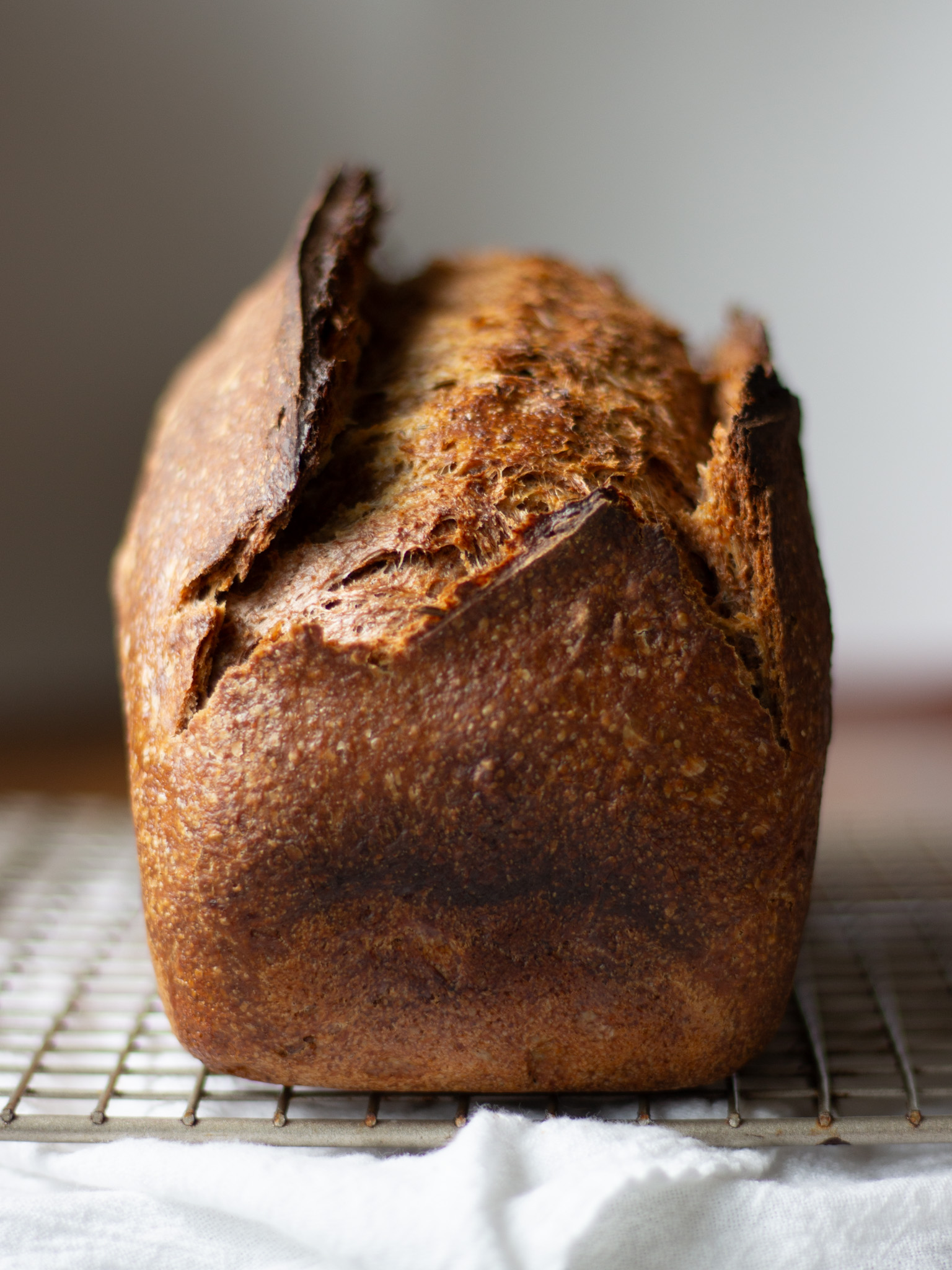
Let cool for 10 minutes in the loaf pan, then invert to release and cool for at least an hour on a wire rack before slicing.
Expert Tips
- Don't skip the stretch and folds - This is where the marbling magic happens. I recommend at least 2, but 3-4 is preferable. The more you do, the better your marbling will be!
- Watch the dough, no the clock - The rises here take a good amount of time, but it's worth the wait! I've given time estimates in the recipe card based on how long my dough has taken, but keep in mind that's with my starter, in my kitchen, and yours is probably different! Plan on a multi-day process, and watch the dough rather than the clock to tell when the rises are done.
- Cocoa powder is hard to work in to dough - This will take considerable finger strength. Use a mixer if you want. Go slowly at first since the cocoa powder tends to plume.
- Don’t worry about the dough colors becoming homogenous - remember how hard it was to get the cocoa powder mixed in? A few stretch and folds plus shaping will give you a lovely marble effect.
- Bake this like a boule - If you want more of a traditional sourdough loaf rather than a sandwich loaf, you can shape and bake however you usually do that. The bake times and temperatures will remain the same, but make sure you check the internal temperature if you're significantly changing the shape of the loaf.
Marble Sourdough Rye FAQ's
Some rye breads contain seeds, which makes them seeded rye breads. If you've been perplexed by the very distinctive flavor of some rye breads, I'd bet money you've been eating seeded rye! Caraway seeds are what give (seeded) rye breads their one-of-a-kind flavor. It balances the sour notes of this bread so well!
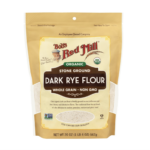
The simplest way to make marble rye at home is to use a combination of dark rye and all purpose flours. These are easy to find, will give you great flavor, and a predictable rise. I will link the dark rye flour I keep on hand in the recipe card below.
Swirl breads have one large, distinctive coil in the bread. This is made by combining dough colors or adding some type of flavored swirl during shaping. Examples of this would be this sourdough cinnamon raisin bread, this pumpkin cinnamon swirl sourdough, and this classic sourdough cinnamon swirl bread.
Marble breads have much more subtle swirls of dark and light dough throughout the bread - think of the veining in an actual piece of marble. To achieve this look, the doughs are mixed separately and combined during stretch and folds or coil folds. The result is a more cohesive loaf of bread, where you can't really tell where the different doughs start or end.
Storage, Freezing, and Make-Ahead Tips
- Storage - Let this cool completely, then store in a bread bag or wrap tightly in plastic wrap. Unsliced bread will keep for up to 2 days. Then once it's sliced, it's best eaten within a few days.
- Freezing - To freeze this bread, I wrap in plastic wrap then place in a ziplock bag - this keeps it well-protected from freezer burn. It will keep for up to 3 months. I highly recommend slicing before freezing so you can grab a slice as needed!
- Making ahead - You have a couple different options for making this ahead:
- Do a cold proof - You can do the second proof in the fridge for up to 36 hours. Just be sure the dough is covered very well so it doesn't dry out!
- Bake fully, but don't slice until you're ready - Bread stays freshest before it's sliced. You can make this up to 2 days ahead, cool completely, wrap tightly, then slice when ready. If you want to recrisp the crust, spritz it with water and bake in a 375 degree oven for 12-15 minutes.
More Sandwich Bread Recipes You’ll Love


did you make this recipe?
I would love to hear how it went! Please leave a comment and review down below 🙂
Marble Sourdough Rye
Ingredients
For The Dough
- 350 grams water
- 75 grams active sourdough starter
- 12 grams neutral oil
- 10 grams molasses
- 365 grams all purpose flour
- 175 grams dark rye flour
- 13 grams caraway seeds optional (see note)
- 10 grams salt
For the Dark Dough
- 2 tablespoons cocoa powder
Directions
- Combine the water, starter, oil, and molasses in a large bowl. Add the flour, caraway, and salt and mix until no dry flour remains. Mix with your hands if it becomes too difficult with a spoon. Divide dough in half (you don’t need to be exact here). Return one half to the bowl and cover. Place the other half in a second bowl and add the cocoa powder. Work it into the dough with your hands until no dry powder remains. You’ll want to work slowly at first as the powder tends to plume quite a bit. Once the dough is a cohesive color, cover and let rest for 20 minutes.Turn the lighter dough out onto a clean work surface and flatten into a rough rectangle. Repeat with the darker dough and place it on top of the lighter dough. Fold the corners in toward the center to shape into a ball, and return to the mixing bowl. Cover. Over the next 3-4 hours, do 2-3 rounds of stretch and folds. This is what will give your bread its marbling, so don’t skip it! Then, let rise at room temperature until roughly doubled in size - about 12 hours. Keep in mind that rye flour slows down the rise so this will likely take longer than your typical sourdough loaf!Turn dough out onto a lightly floured surface. Flatten into a large rectangle and fold the shorter sides into the middle, like you would fold a letter. Roll into a loaf, and pinch the seam and ends to seal. Place seam side-up onto a floured tea towel and place in a loaf pan. Cover and let rise until peak of dough comes up 1-inch above the rim of the pan - about 1 ½ - 2 hours.Preheat oven to 450 degrees. Cut a sheet of parchment paper down to fit like a sling across the long sides of a metal loaf pan. Turn dough out onto the prepared parchment paper. Score, then transfer back to the loaf pan on the parchment paper and cover with a second metal loaf pan. Bake at 450 degrees for 40 minutes, then uncover and bake 10-15 minutes more, until crust is browned to your liking and bread is baked through to 200 degrees. Cool for 10 minutes in the pan, then use the parchment paper to lift out. Cool completely on a wire rack.


Mandy Jackson says
The only thing more fun than making this bread is eating this bread!