
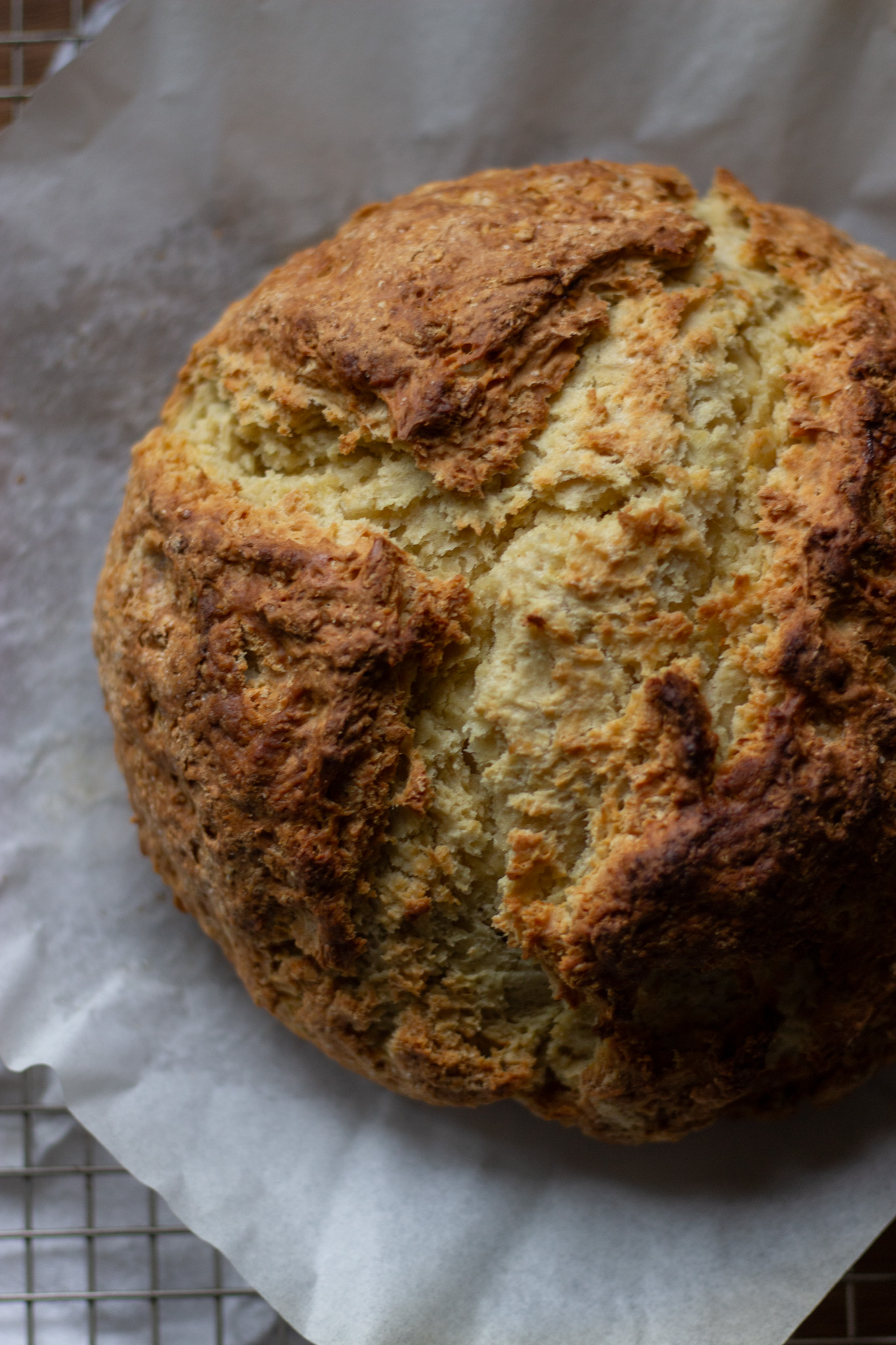
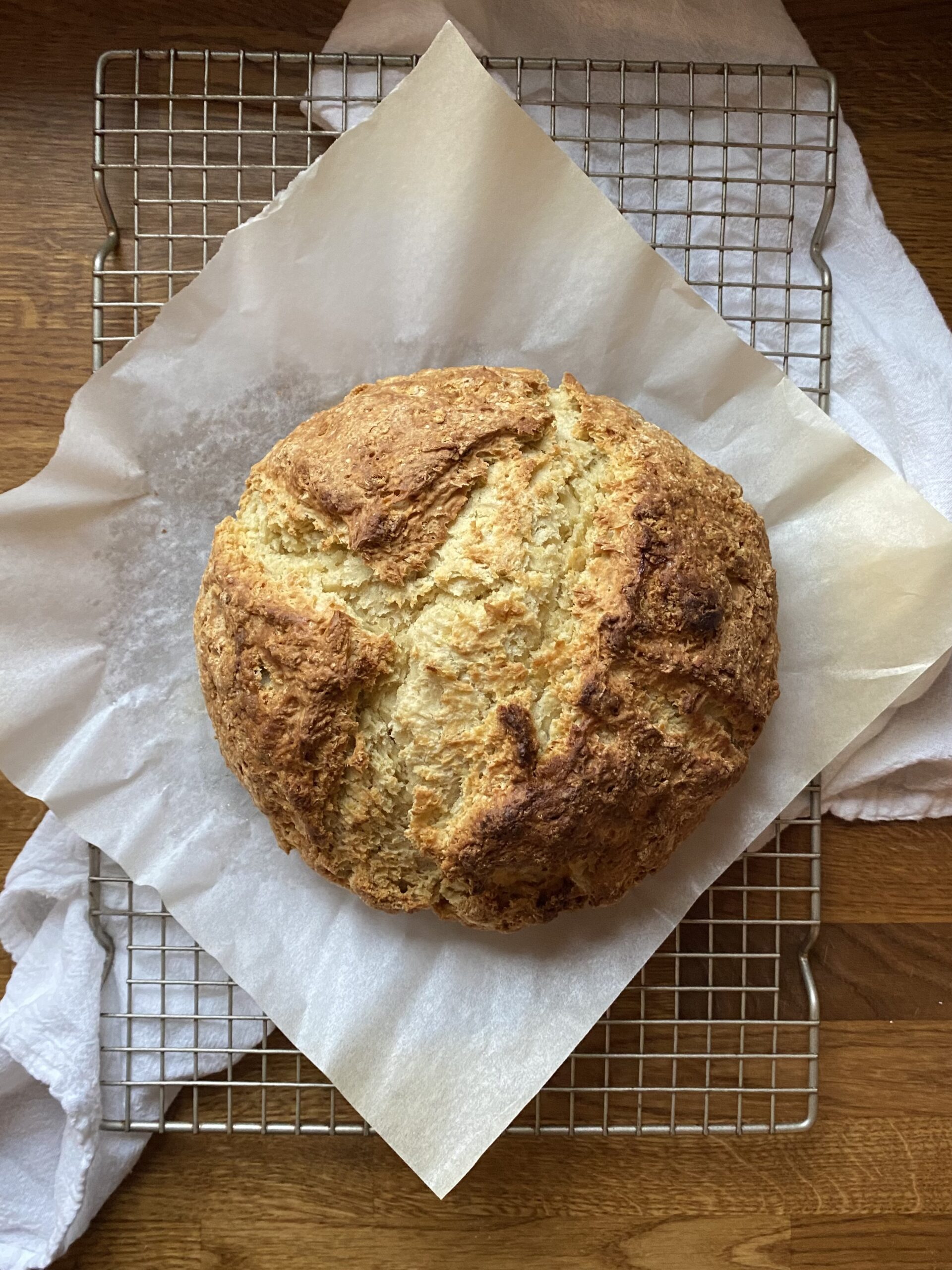
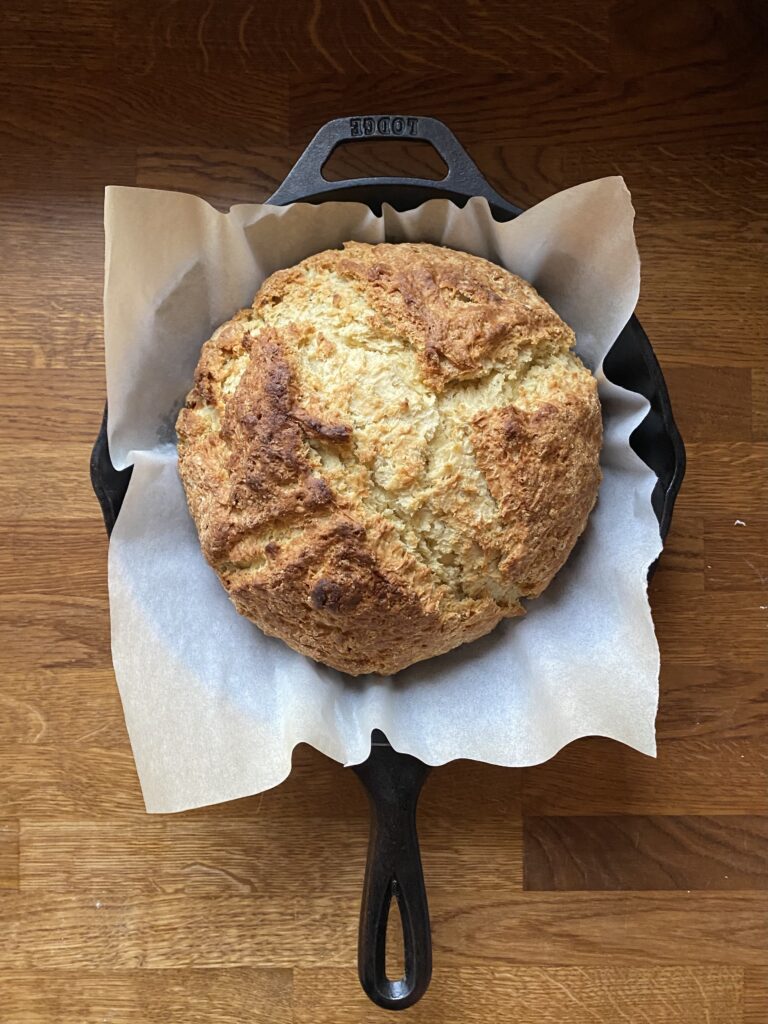
A rustic loaf of Irish soda bread using sourdough discard instead of buttermilk. This has a crusty, buttery exterior, and a soft, dense interior that's packed with flavor. Enjoy it warm out of the oven or at room temperature.
Irish soda bread is so called because it’s leavened using baking soda. It always has buttermilk in the dough, which interacts with the baking soda to produce the rise.
So if you’re wondering why use discard here, it’s not because we need it for its leavening power at all - it’s because it has a pH level slightly lower (more acidic) than buttermilk, so when we add milk to it, it dilutes the pH to make it roughly the same as that of buttermilk, and creates the exact reaction we want when combined with the baking soda.
AKA, you don't need any buttermilk here! We're using discard!
Irish Soda Bread
If you're unfamiliar with Irish soda bread, you are in for a real treat! It's a rustic quick bread with that I really think more closely resembles a biscuit or scone than a typical loaf of bread.
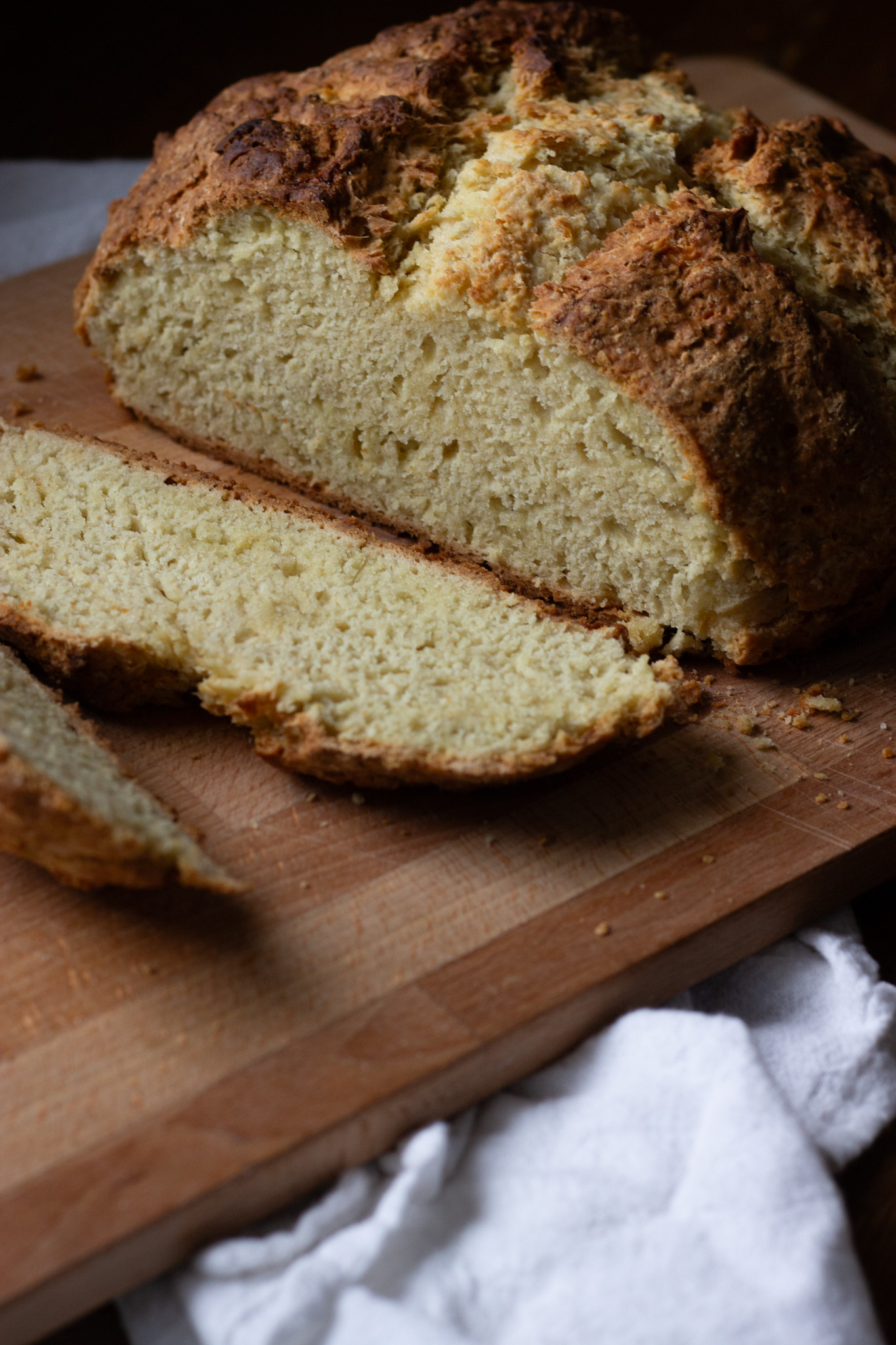
Since it uses baking soda for the rise, you can have it mixed, shaped, and in the oven in about 15 minutes. Which, for sourdough bakers feels like ultra-warp-speed!
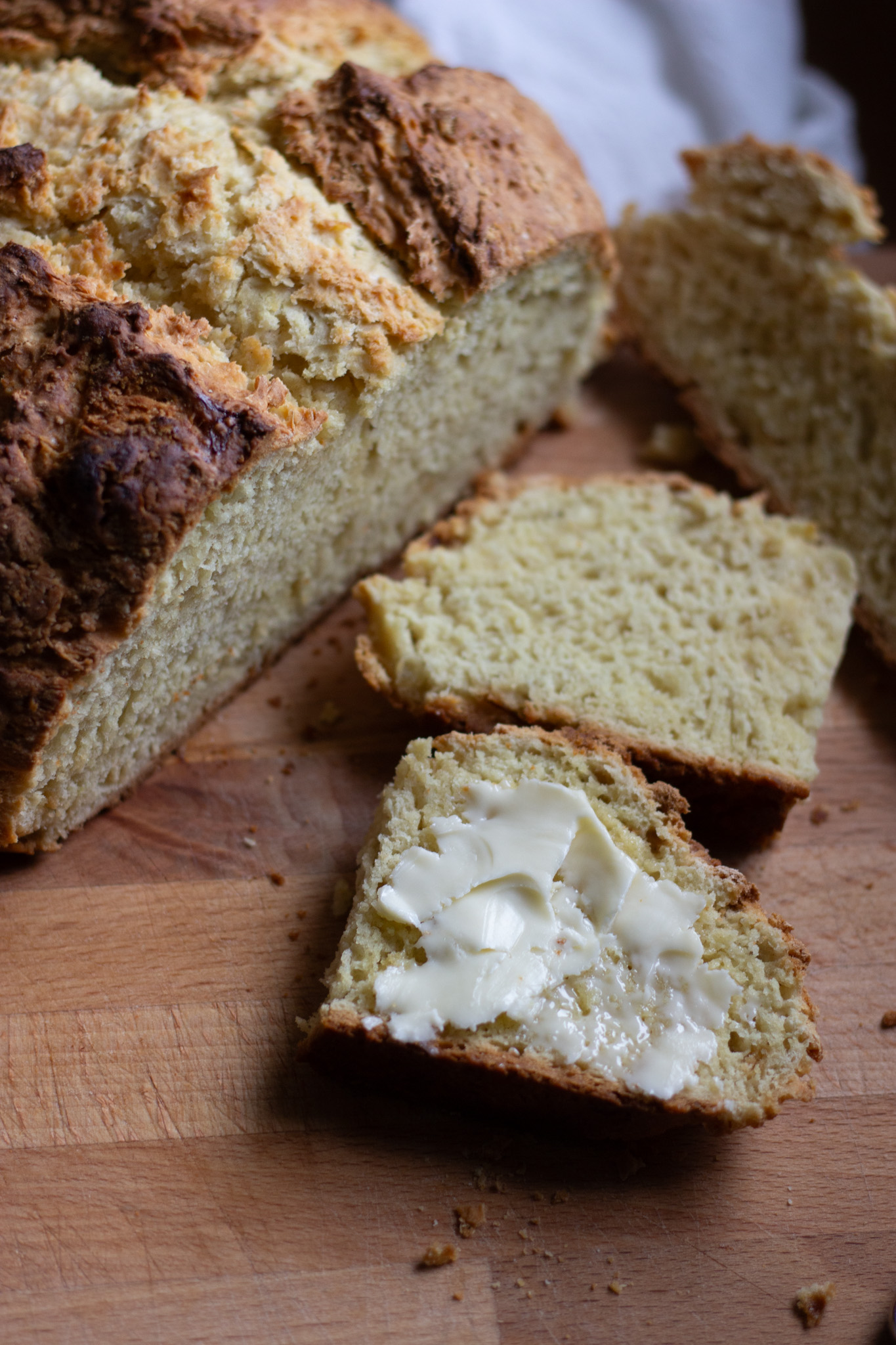
I really, REALLY recommend you eat this warm when the crust is at its crustiest. Slather it with salty butter or your favorite jam if you must, but it's so good on its own, it really doesn't need it.
A (very brief) history
Irish soda bread originated in Ireland in the 1830's shortly after baking soda was introduced to the island.
Originally, the bread required only four ingredients: flour, baking soda, salt, and buttermilk and was often baked in cast iron over an open fire. It was a quick, reliable way to produce a hearty bread, and required no oven.
The humble Irish soda bread is credited with sustaining many lives during the potato famine of the mid-19th century.
Making Irish Soda Bread with Sourdough Discard
If you've made Irish soda bread before, this method is going to be very familiar: Mix your wet stuff, mix your dry stuff, mix the wet and dry together, score it and bake it.
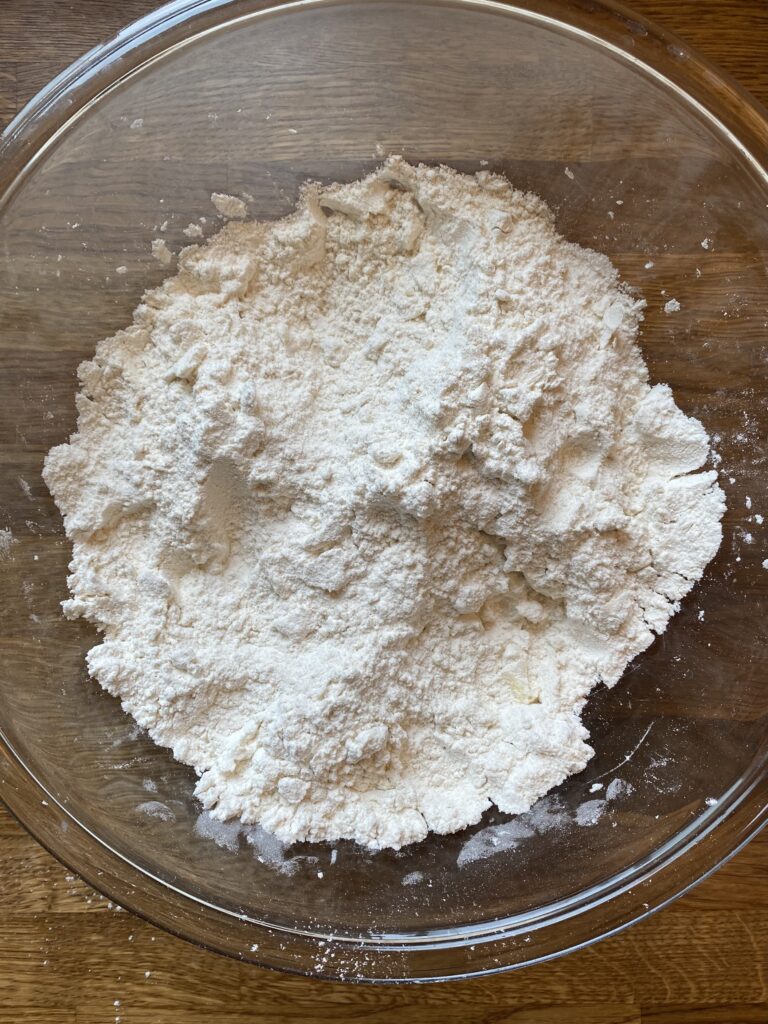
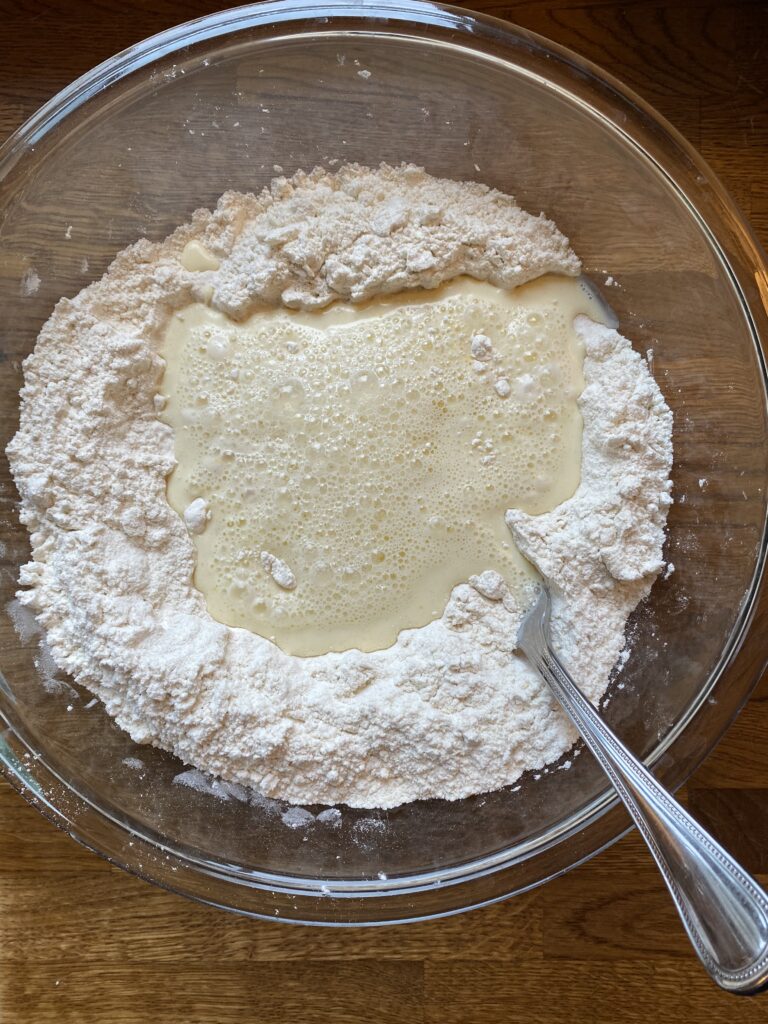
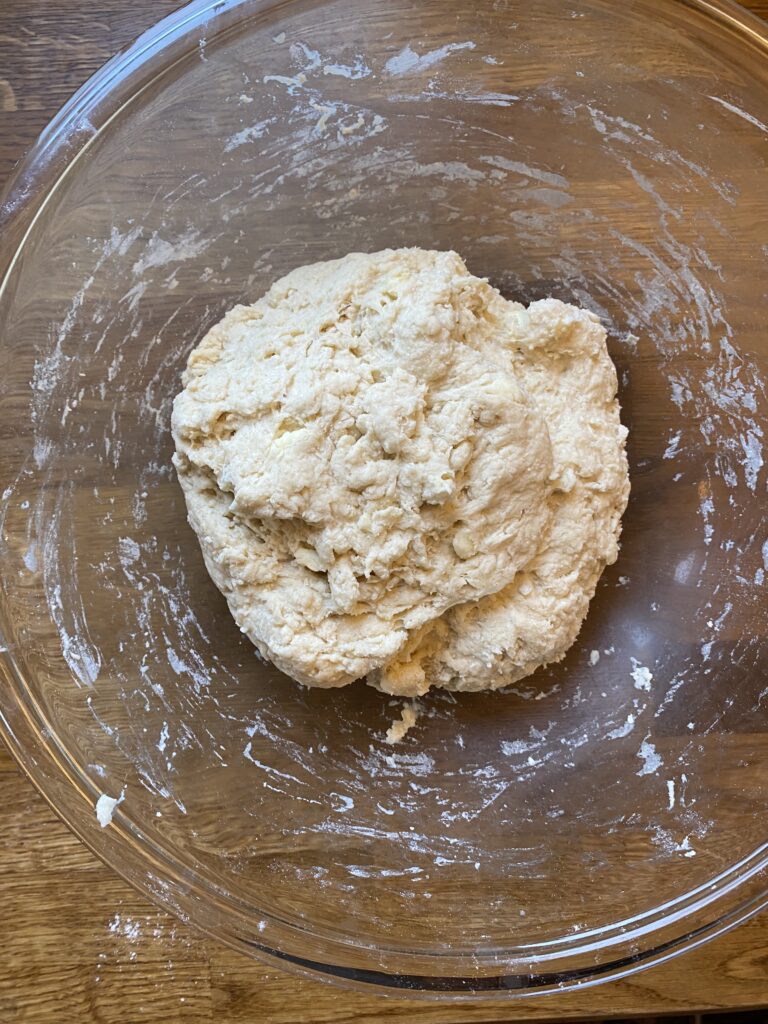
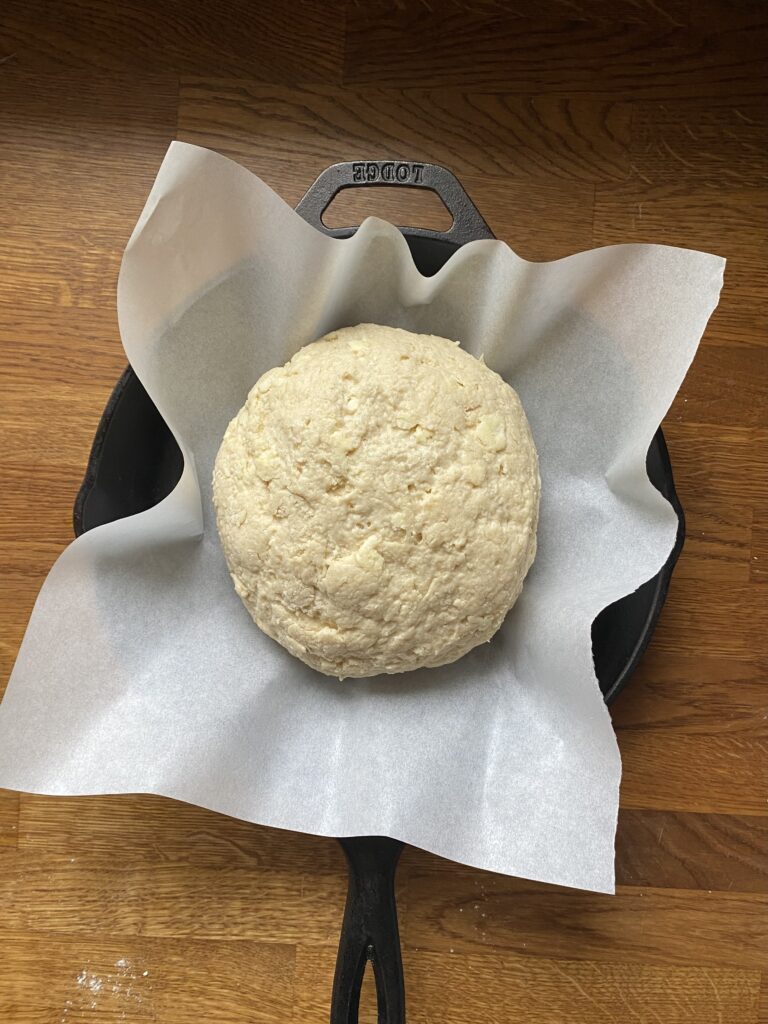
The real difference in this recipe is that it uses discard instead of the traditional buttermilk.
Why discard works instead of buttermilk
The chemical reaction between the baking soda and the acid in the buttermilk is what gives this bread its rise.
Lactic acid is the primary acid in buttermilk. It ALSO happens to be the primary acid in sourdough discard. That's right, you already have a lactic acid culture hanging out in your kitchen.
However, their pH levels are fairly different:
- Buttermilk = 4.6
- Sourdough discard = 3.5
This means sourdough discard is significantly more acidic than buttermilk. So, it's mixed with whole milk here (which has a pH of 6.5) to bring down the acidity to a buttermilk level, and mimic the consistency of buttermilk.
The result is bread that rises just as it should, with really great flavor.
More things you should know about Irish soda bread
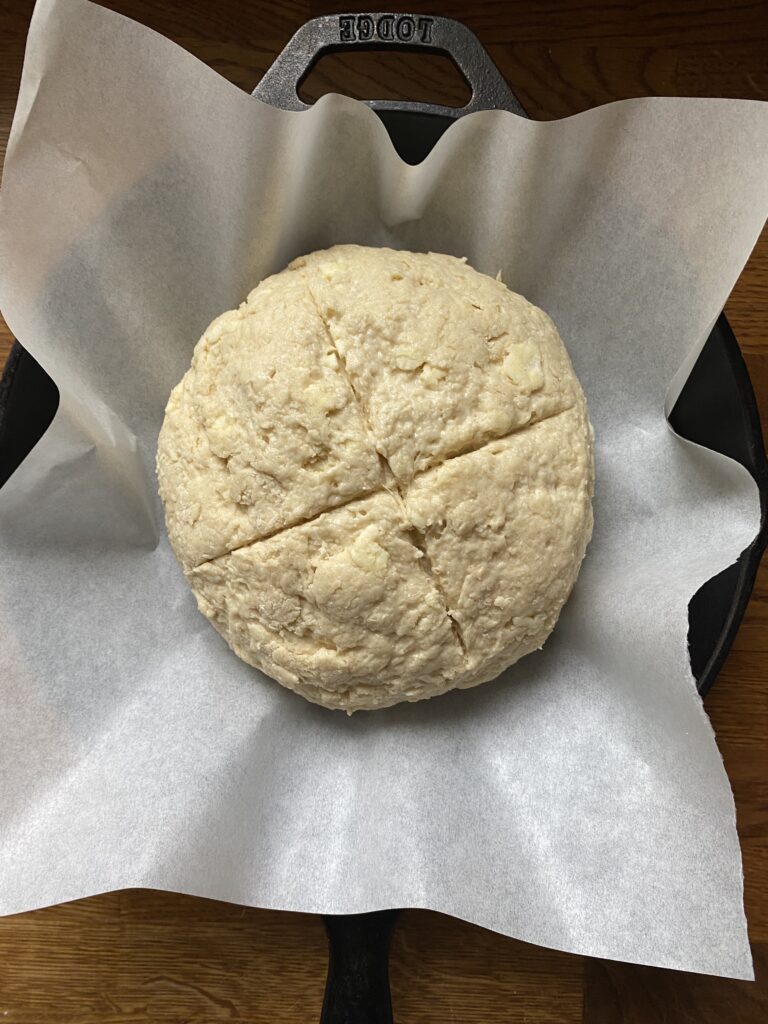
- It is always scored with an X. I've read conflicting theories on why this is - some people say it's to let the fairies escape, some say it's to bless the bread, some say it's to keep evil spirits away. Whatever the reason, the X has a lot of tradition behind it, and is a must if you make this!
- You can add dried fruit! Many variations of Irish soda bread have raisins or other dried fruit added in. You can most definitely do that here. Add 1 cup of dried fruit to the dry ingredients after the butter is cut in and proceed with the recipe.
Storing
This will stay fresh for up to 2 days at room temperature. Be sure to wrap it up very well once it's cool to maximize freshness. You can also keep this in the fridge for up to a week.
Sourdough Discard Irish Soda Bread (No Buttermilk!)
Ingredients
- 1 ¼ cup whole milk
- ½ cup sourdough discard
- 1 egg
- 4 cups all purpose flour (spooned + leveled)
- ¼ cup sugar
- 1 teaspoon baking soda
- 1 teaspoon salt
- 5 teaspoons unsalted butter, cold and chopped
Directions
- Preheat the oven to 400 degrees. Line a cast iron skillet with parchment paper.In a medium bowl, whisk together the milk, discard, and the egg. To a large bowl, add the flour, sugar, baking soda, and salt. Mix to combine. Add the butter and cut in using a pastry cutter or by working it with your fingertips. Once it’s in pea-size pieces, make a well in the center of the dry ingredients and pour in the discard mixture. Gently work the dough together with a fork. When it becomes too difficult to mix with a fork, begin kneading the dough in the bowl. Kneading should take about a minute total. You want to ensure all the flour is moistened and shape it into a ball. Transfer the ball of dough to the prepared cast iron skillet. Score the top with an X.Bake 45-55 minutes, until baked through to an internal temperature of 195 degrees and the top is golden brown. I recommend checking about 30 minutes into baking, and if the bread is browning too quickly during baking, tent with foil.Remove from oven and cool for 10 minutes, then slice and eat, or transfer to a wire rack to continue cooling.Leftovers will keep wrapped up well for up to 2 days at room temperature, or up to a week in the fridge.

Barry says
I’ve made this Irish Soda Bread several times. It’s delicious! And yes it does spread substantially when baked on a sheet pan. Next time I will be sure to bake it in a cast iron skillet!
MJ says
I don’t use whole milk. Will almond milk work. I also have A2 half & half.
Mandy says
I can’t say for sure because I’ve never tried almond milk in this, but I suspect it would work! There may be a slight difference in the texture of the bread. Would love to hear how it goes if you try it!