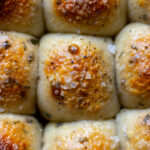
Sour Cream Chive Sourdough Dinner Rolls
Perfect for when you want an ultra-deluxe roll. They’re SO soft and fluffy, have the best savory flavor from the chives, and a really nice sour tang from the slow rise and sour cream.There’s butter in almost every step of the recipe (it’s kneaded into the dough, the pan is buttered very well, and melted butter is brushed over the baked rolls). Altogether, you’ll need 8 tablespoons of butter.Makes 24 rolls.
Servings: 24
Calories: 126kcal
Ingredients
For the Tangzhong
- 150 grams whole milk
- 50 grams all purpose flour
For the Dough
- 200 grams active sourdough starter
- 100 grams sour cream
- 50 grams sugar
- 1 egg
- 450 grams all purpose flour
- 12 grams salt
- 4 tablespoons unsalted butter, at room temperature
For filling and topping
- ½ cup finely chopped fresh chives (see note)
- 1 egg, beaten with 1 tablespoon water
- Flaky salt (such as Maldon)
- Freshly ground black pepper
- For brushing: 2 tablespoons unsalted butter, melted
Directions
- Make the tangzhong paste: Whisk together the milk and flour in a medium microwave safe bowl. Microwave in 30 second intervals, whisking between each, until mixture is the consistency of mashed potatoes. This takes a total of 90 seconds for me. Set aside to cool slightly until it feels like a comfortable bath water temperature. (I spread mine thinly in the bowl and place it in the fridge while I prep the rest of the ingredients.)
- Mix the dough: Scrape the tangzhong into the bowl of a stand mixer fitted with the paddle attachment. Add the starter, sour cream, sugar, and egg. Mix to combine. Add the flour and salt and mix on LOW until no dry flour remains. The dough will be on the drier side at this point - it will come together during kneading!
- Knead the dough + the first rise: Switch to the dough hook and begin kneading on LOW (not past 2 on a KitchenAid). Add the butter a few small pats at a time. Once they’re fully incorporated, add another. It will take 3-4 minutes to add all the butter. Continue kneading for 5-6 minutes more, until dough begins to look smooth and pulls away from the sides of the bowl. Total kneading time will be 8-10 minutes. Turn dough out onto a lightly floured work surface and shape into a ball. Place inside a clean bowl, cover well, and let rise at room temperature for 8-10 hours, until roughly doubled in size.
- Shape into rolls + second rise: Coat a 9 by 13-inch metal pan with 2 tablespoons of butter and set aside. This will be a very generous coating to prevent sticking and to add lots of flavor and good browning to the rolls as they bake. Turn dough out onto a lightly floured surface. Roll into a 12” square, adding more flour as needed to prevent sticking. Sprinkle chives over the dough, then roll into a loose log and press into a rectangle. Roll out again, this time into an 16 x 6-inch rectangle. Use a pizza cutter, bench scraper, or sharp knife to cut into an 8x3 grid. This will leave you with 24 squares of dough, each roughly 2” square.Shape each dough piece into a roll and place in a 6x4 grid in the prepared baking pan. Cover well and let rise until puffed up, about 2-3 hours.
- Bake: Toward the end of the second rise, preheat the oven to 375 degrees.Brush tops of rolls with the egg wash, then sprinkle generously with flaky salt and freshly ground black pepper.Bake on the middle rack for 25-30 minutes, until cooked through to 200 degrees and golden brown. Brush with the melted butter immediately after taking them out of the oven. Let cool 5 minutes in the pan before serving. You can serve these in the pan or slide them onto a wire rack. Serve warm or at room temperature.
Notes
The chives - Lightly dried chives OR fresh chives will work here.
- Lightly dried chives - these are much easier to find in the store year-round, and already come washed, dried, and chopped, so they’re ready to add to the dough with no prep work. You’ll want 1 (0.35 ounce) container for this recipe. You can find them in the refrigerator section of the grocery store next to the fresh herbs.
- Fresh chives - Be sure to dry them well after washing, otherwise they can add too much moisture to the dough.
Equipment


Nutrition
Calories: 126kcal (6%) | Carbohydrates: 20g (7%) | Protein: 3g (6%) | Fat: 3g (5%) | Saturated Fat: 2g (13%) | Polyunsaturated Fat: 0.3g | Monounsaturated Fat: 1g | Trans Fat: 0.1g | Cholesterol: 22mg (7%) | Sodium: 204mg (9%) | Potassium: 45mg (1%) | Fiber: 1g (4%) | Sugar: 3g (3%) | Vitamin A: 150IU (3%) | Vitamin C: 1mg (1%) | Calcium: 19mg (2%) | Iron: 1mg (6%)
Tried this recipe? Pin it today!Mention @letsmakesourdough or tag #letsmakesourdough!
